Japanese dining etiquette has a reputation for being complicated. In practice, a handful of habits cover almost every situation, and restaurants welcoming international guests are generally patient with visitors who are clearly trying. This guide covers what matters, by type of restaurant, and leaves out the rules nobody actually expects you to follow.
The basics that apply everywhere
- Say “itadakimasu” before eating and “gochisousama deshita” as you leave — a simple thank you, warmly received.
- Don’t stand chopsticks upright in rice or pass food from chopstick to chopstick; both are associated with funerals. Use the chopstick rest, or lay them across your dish.
- Use the wet towel (oshibori) for your hands, not your face, at more formal restaurants.
- Tipping is not customary. Excellent service is part of the meal; leaving cash on the table may simply cause staff to chase you with it.
- Payment is usually made at the register rather than at the table. Look for a tray to place cash or your card on.
At a sushi counter
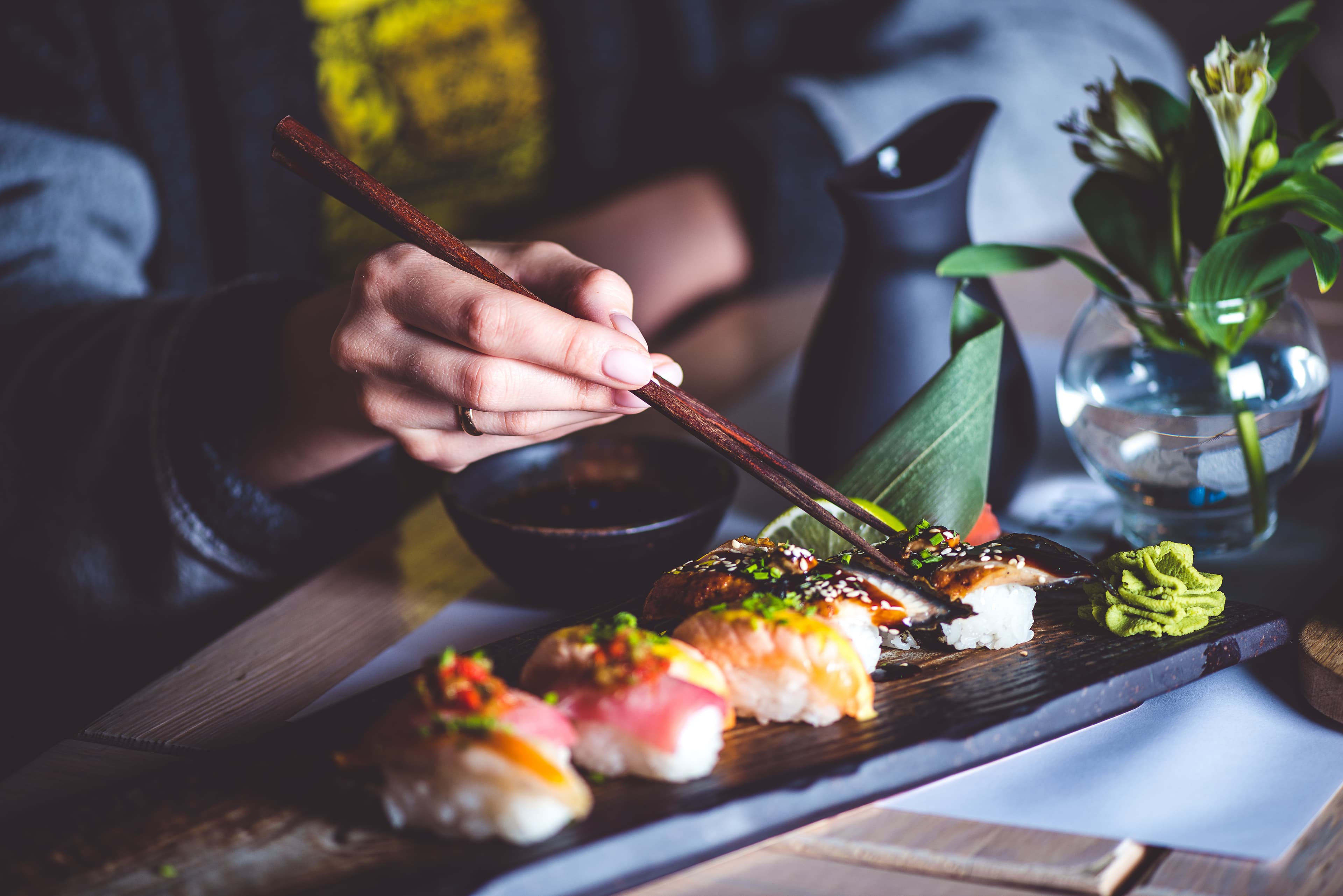
At omakase counters the chef serves pieces one at a time, already seasoned; eat each piece soon after it is served. It is fine to eat sushi with your fingers. If you use soy sauce, dip the fish side lightly rather than soaking the rice. Strong perfume is best avoided — the counter is close and aroma is part of the meal.
Photography rules vary; ask before photographing the chef or other guests. Arriving on time matters more here than almost anywhere, because everyone at the counter is served together.
Izakaya, ramen and casual dining
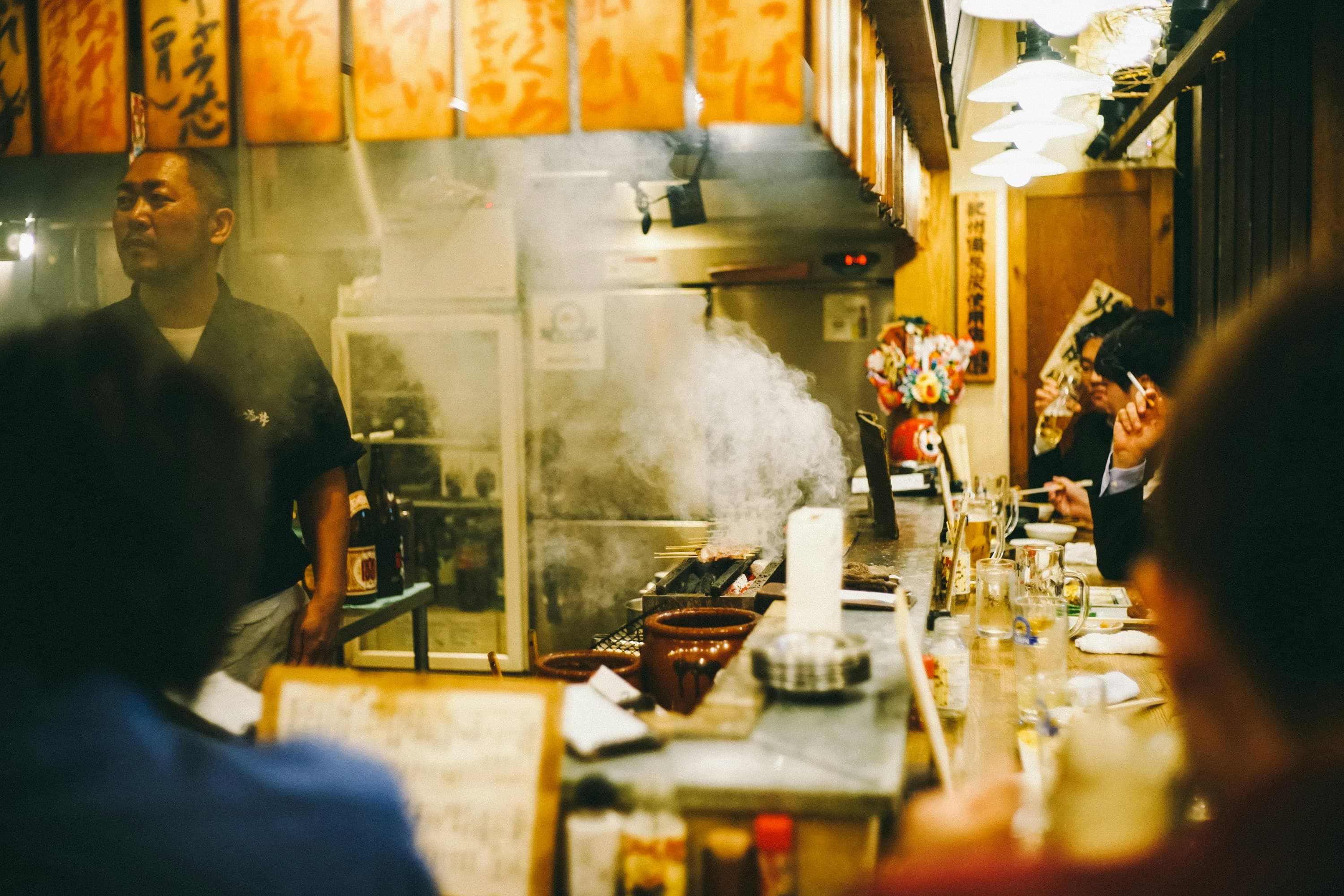
Izakaya are relaxed by design. Many charge a small seating fee that comes with a little appetizer (otoshi) — it is normal, not a mistake on the bill. Ordering a round of drinks first is customary. Plates are usually shared.
Many ramen shops use a ticket machine at the entrance: choose and pay, then hand the ticket to staff. Slurping noodles is perfectly acceptable. These places are often small and busy, so it is polite not to linger once you have finished.
Kaiseki and ryokan dinners
Kaiseki is a seasonal sequence of small courses, and at a ryokan it is often served in your room or a private dining room at a set time. Dinner times are usually agreed at check-in; being late can affect the kitchen’s timing for every course. Lift lidded bowls and replace the lids when finished. Wearing the provided yukata to dinner at a ryokan is normal.
Set menus have limited flexibility, so dietary requirements should be shared when booking, not at the table.
Reservations and cancellations
Small restaurants plan ingredients around confirmed guests, which is why many ask for a card guarantee and charge cancellation fees close to the date. If plans change, cancel as early as possible. Our guide to restaurant reservations in Japan explains how booking works for visitors.
How Glow Japan helps
We choose restaurants that suit the evening you want, coordinate reservations where the restaurant allows, and pass on dietary needs in advance — see our Japan dining concierge.
Questions travelers ask
- Should you tip in Japanese restaurants?
- No. Tipping is not customary in Japan. A sincere thank you as you leave is the expected gesture.
- Is it rude to slurp noodles in Japan?
- No. Slurping ramen, soba and udon is normal and widely considered part of enjoying them.
- What is the otoshi charge at an izakaya?
- A small seating charge that usually comes with a little appetizer served when you sit down. It is standard practice, not an error on the bill.
Plan the meals that make your trip